How can the energy efficiency of aircraft be improved by up to 50 percent? This is the subject of the publication “The Energy-Efficient Aircraft of the Future: A Long-Term Perspective” by the German Aerospace Society (DGLR). The goal: to enable climate-neutral air travel by 2050. Prof. Dr. Mirko Hornung, Director of Science and Technology at Bauhaus Luftfahrt, is one of the authors.
With the goal of drastically reducing aviation’s climate-impact footprint, and even achieving a net-zero aviation system by 2050, the aviation stakeholders face enormous challenges. While it is clear that these goals can only be achieved through the use of renewable and sustainable energy sources such as sustainable aviation fuels (SAF) and green hydrogen, there will be limitations in their availability, as well as significantly increased fuel cost associated with this energy transition. The challenges arise from the investments required for renewable energy production capabilities, infrastructure and logistics, as well as higher recurring costs due to increased production costs of SAF and hydrogen. Therefore, targeted measures to significantly enhance the energy efficiency of the air transport system are essential, addressing both transport operations and aircraft design.
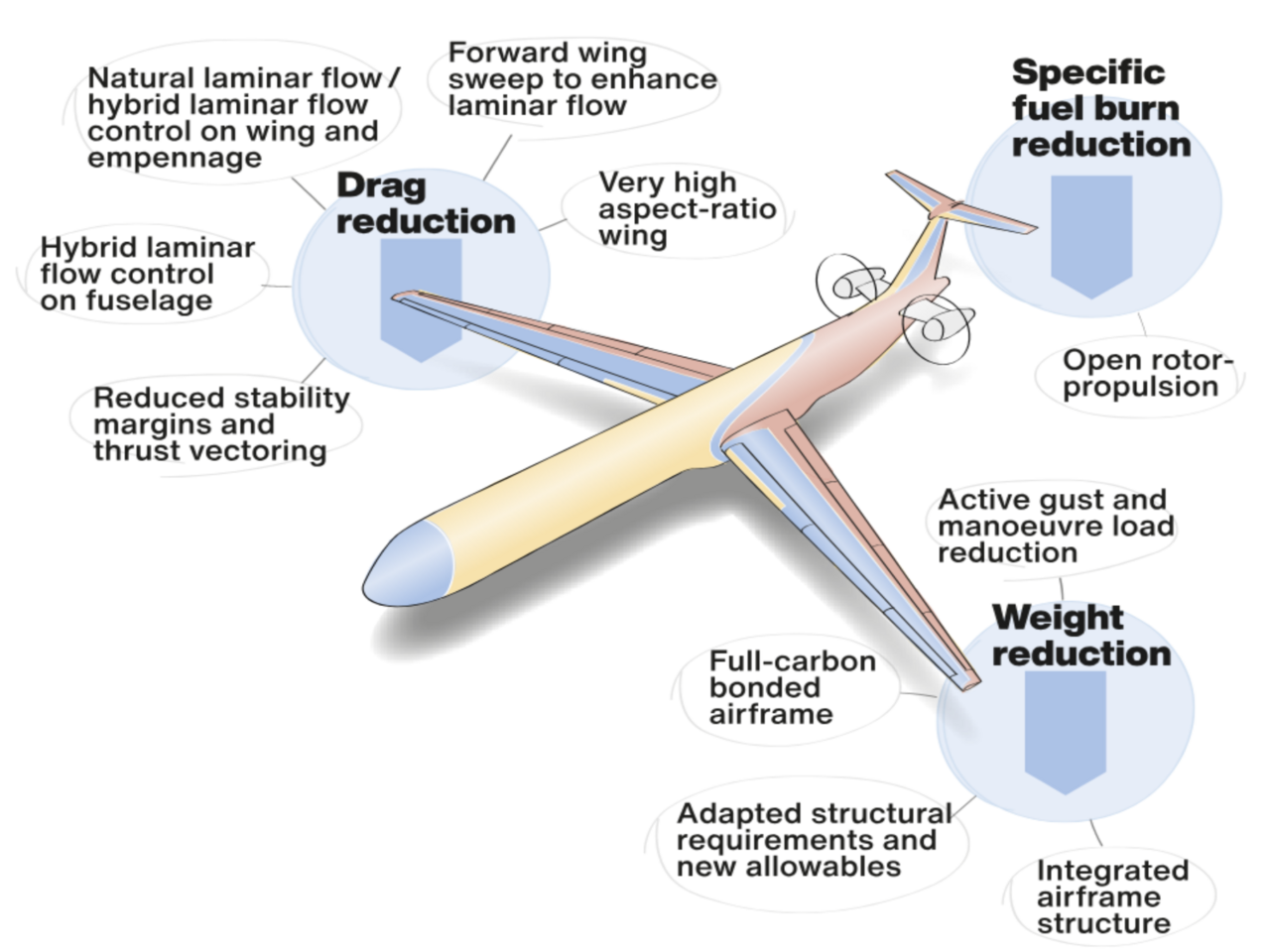
In this paper, the authors focus on the latter, examining how much aircraft efficiency can be further enhanced to support these goals. To this end, various technological options are discussed with a balanced approach, considering both their potential and the challenges associated with significantly improving energy efficiency. Based on our findings we outline a pathway for achieving a reduction of up to 50% in the energy consumption of future aircraft.