
Which strategy leads to cost-effective, climate-friendly aviation in 2070? Four scenarios from the Bauhaus Luftfahrt think tank illustrate the impacts of different transformation paths. Key points: In the long term, high investments pay off; hydrogen and highly efficient aircraft offer the greatest opportunities for climate protection; sustainable fuels are essential in every scenario.
“Despite high investment costs, greater ambition for climate-friendly aviation will pay off economically,” states Prof. Dr. Mirko Hornung, Executive Director Research and Technology at Bauhaus Luftfahrt. Even for a moderate transformation path relying on the blending of sustainable fuels, the required investments already amount to several hundred billion dollars. “However, the Bauhaus Luftfahrt scenarios show that an ambitious transformation will pay off for the overall economy as early as 2050, when highly efficient aircraft using sustainable fuels significantly reduce the societal costs of climate change.”
Each of the four transformation scenarios is based on a core assumption: 70 percent sustainable fuels, 100 percent sustainable fuels, up to 60 percent more efficient aircraft combined with sustainable fuels, or a radical switch to hydrogen. Each path is determined by three central characteristics:
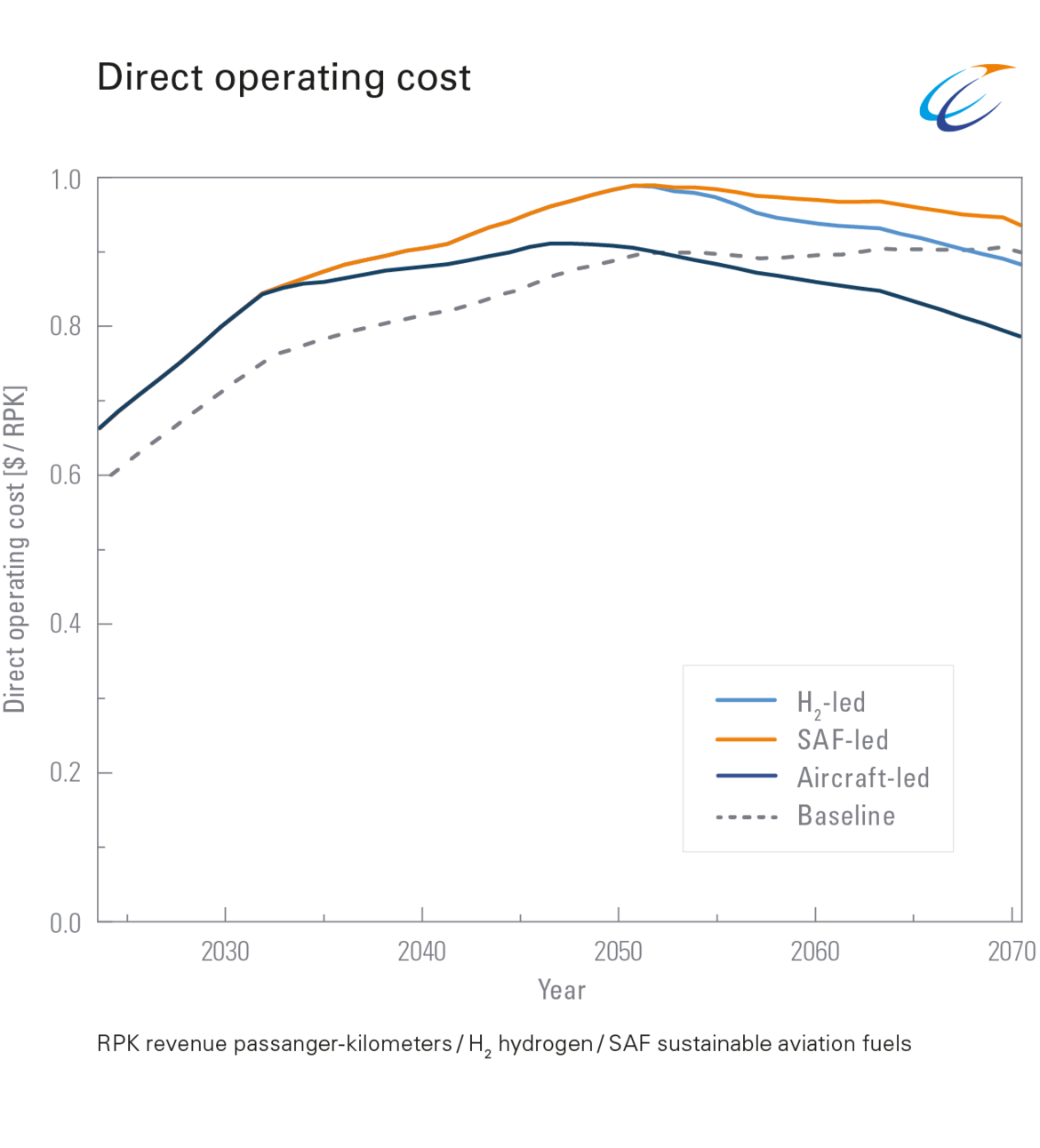
- Sustainable fuel leads to rising operating costs: The combined effect of CO2 pricing and the introduction of sustainable aviation fuels and liquid hydrogen is expected to increase operating costs by approximately 35 to 55 percent per passenger-kilometer across the various scenarios.
- Liquid hydrogen offers long-term cost advantages: Although hydrogen-powered aircraft incur higher acquisition costs, they can lead to lower operating costs in the long term, primarily due to increasing synergies within the energy system.
- Aircraft efficiency is the most important lever for cost reduction: Highly efficient next-generation aircraft offer the greatest potential for significantly mitigating fuel-related cost increases – despite high development and acquisition costs.
Ambitious pathways pay off starting in 2050
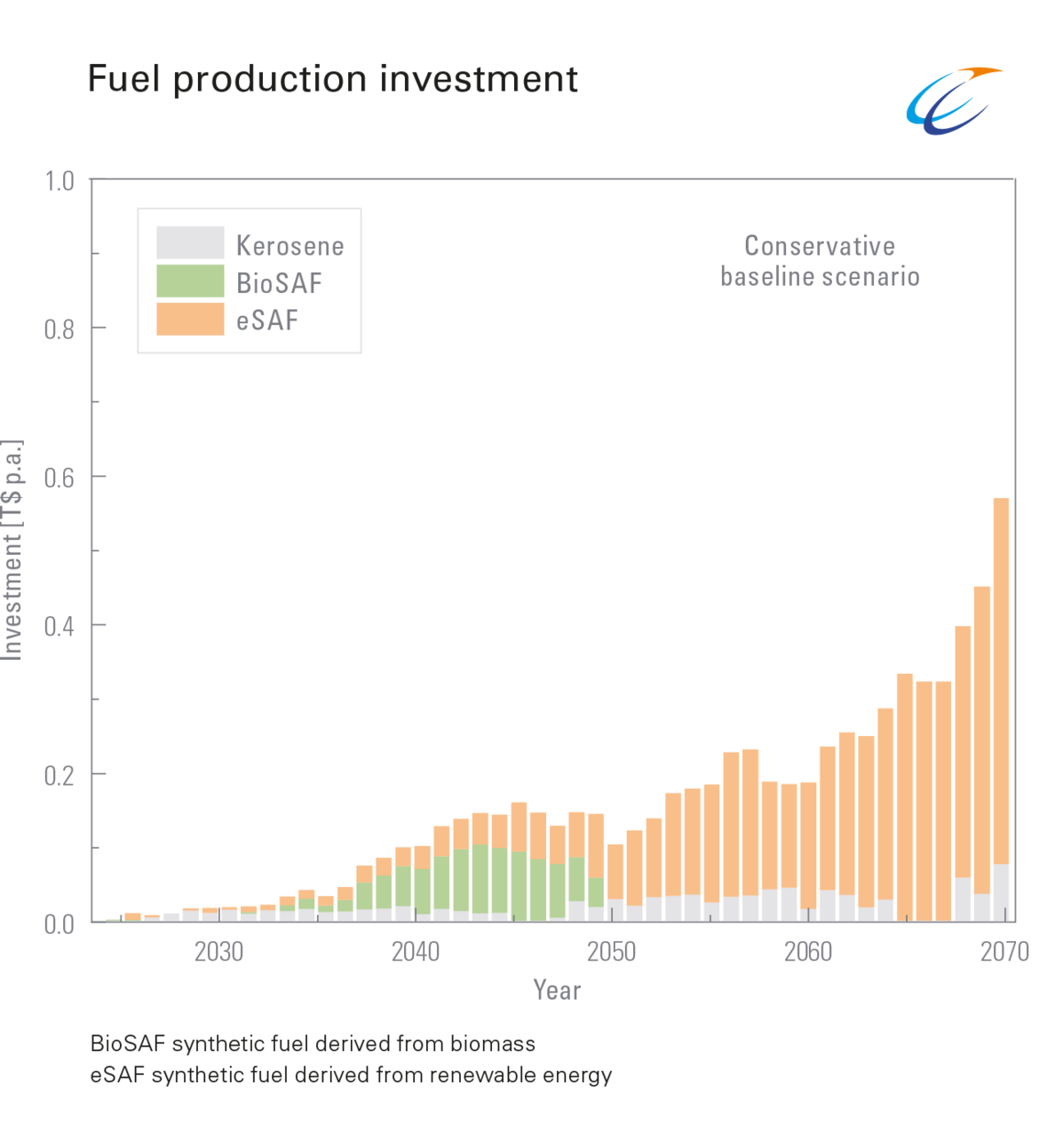
In all scenarios, operating costs rise mainly due to the higher-priced alternative fuels. Even in the conservative scenario with 70 percent sustainable fuel by 2070, substantial global investments of several hundred billion dollars annually would be required. To achieve 100 percent sustainable aviation fuel by 2060, investments would need to increase by another 30 percent compared to the conservative scenario. The conservative pathway initially remains about 10 cents cheaper per passenger-kilometer than the other pathways. However, this gap gradually narrows, reverses after 2050, and the baseline scenario exceeds the projected costs for the more ambitious pathways.
Up to 74 percent fewer CO2-equivalent emissions by 2070
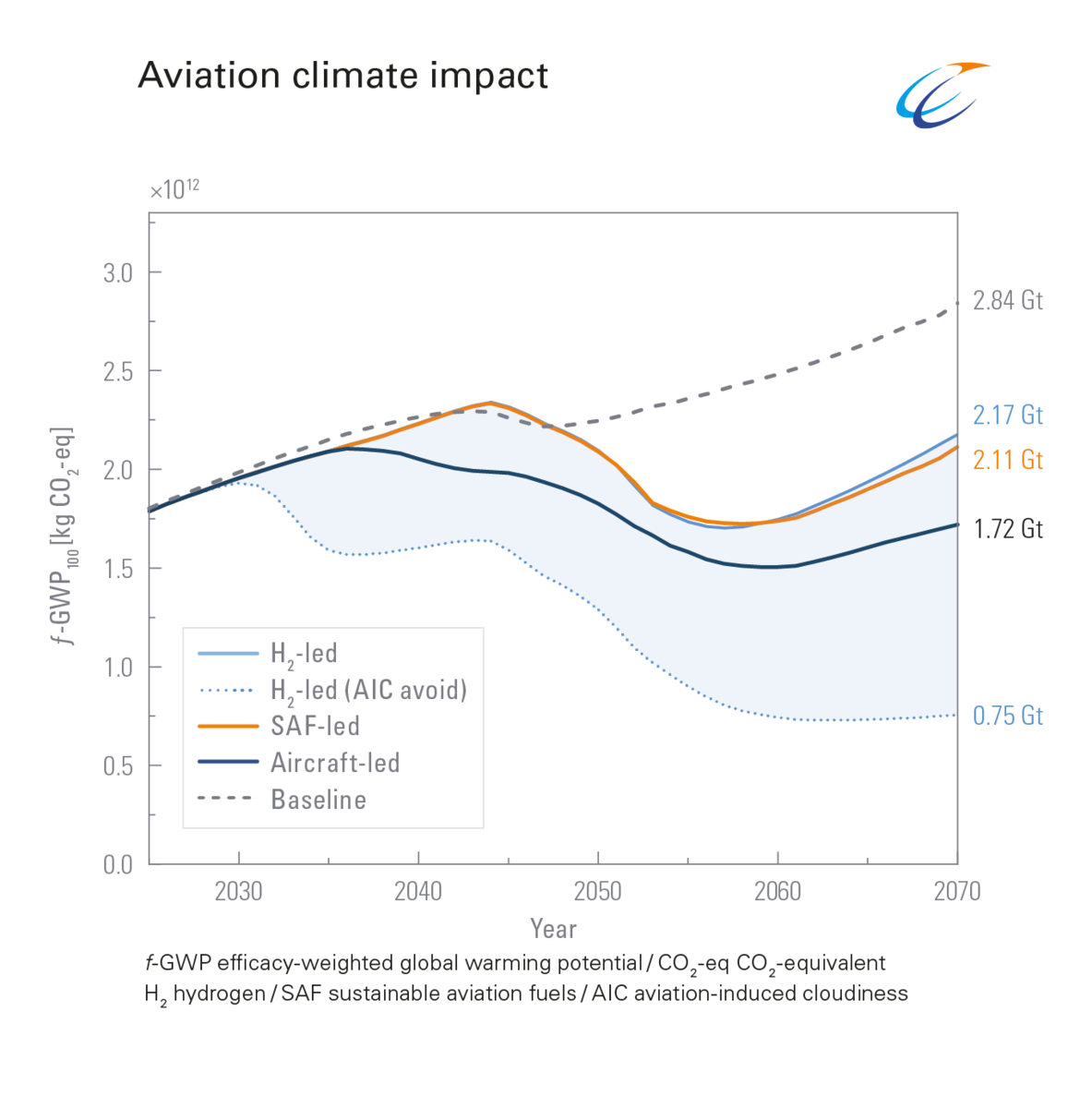
In the conservative baseline scenario, annual emissions reach approximately 2.8 gigatons of CO₂-equivalent (various greenhouse gases and effects), assuming 70 percent adoption of sustainable aviation fuels by 2070. Increasing the sustainable fuel quota to 100 percent by 2060 could reduce CO₂-equivalent emissions by 24 percent. In the highly efficient aircraft with sustainable fuels scenario, emissions are reduced by 40 percent, while the radical hydrogen scenario could achieve a reduction of up to 74 percent in the best case, assuming a low climate impact from contrails and flight routes are adjusted.
Societal benefits of many trillions of dollars
Health, agriculture, energy systems, and weather patterns – the transformation of aviation helps avoid societal costs caused by climate change. In addressing this issue, Bauhaus Luftfahrt takes into account CO2 emissions, non-CO₂-related climate effects, and local air pollution. For the ambitious transformation pathways, the societal benefits amount to several trillion dollars compared to the conservative baseline scenario.
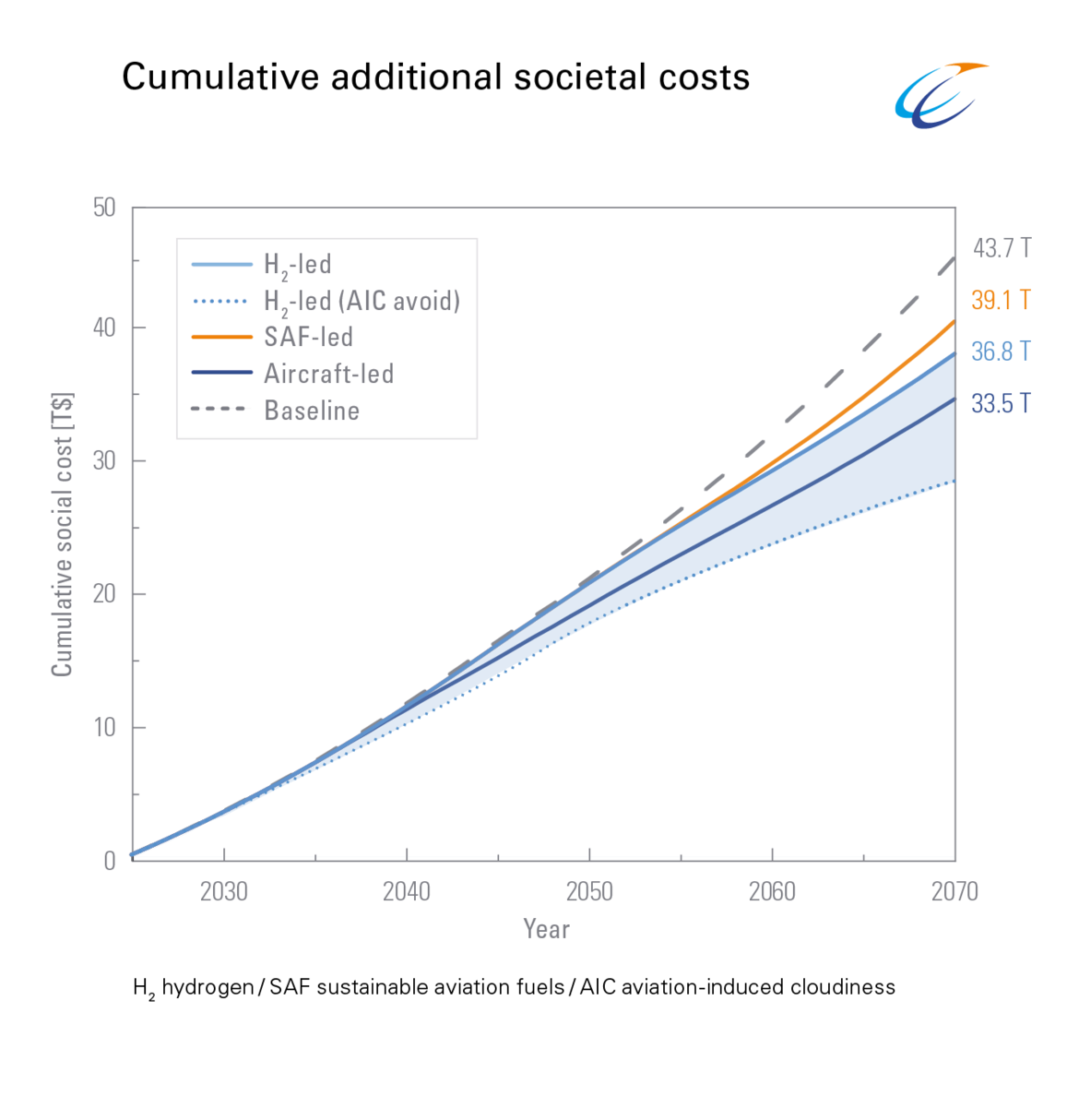
The scenarios are based on modeling the complex interplay of energy supply, network structures, aircraft innovation, and environmental and societal impacts. The focus is on identifying economic levers, not on the exact quantification of (societal) costs. Factors included are air travel demand and economic growth, the development of aircraft technology and the energy mix, fleet dynamics and market acceptance, as well as climate impacts and societal costs.
ILA Berlin, 10.-14. Juni 2026
Bauhaus Luftfahrt is co-exhibitor with MTU Aero Engines (Halle C, Stand 310).