
The LuFo project HybVer (hybridized compressor concepts), which was successfully completed in 2025, investigated an innovative propulsion concept that provides electrical assistance to the compressor section. The key objective was a holistic assessment of the HybVer concept using a multidisciplinary conceptual design evaluated for a regional aircraft and helicopter application.
In HybVer, which was coordinated by Bauhaus Luftfahrt and conducted in collaboration with TU Berlin, TU Munich, and BTU Cottbus, a design space exploration was performed to determine the most promising configuration. The compressor was aerodynamically designed and its operating characteristics were analyzed. In parallel, conceptual solutions for the mechanical compressor design were developed. Detailed models of the electric drive system were established, accounting for aviation-specific requirements. The results from the individual disciplines were integrated into an overall propulsion system model, enabling system-level design and performance studies. Key technologies were identified and a technology roadmap targeting an entry into service in 2035 was derived.

The HybVer propulsion system with electric support of the compressor shaft and rotors
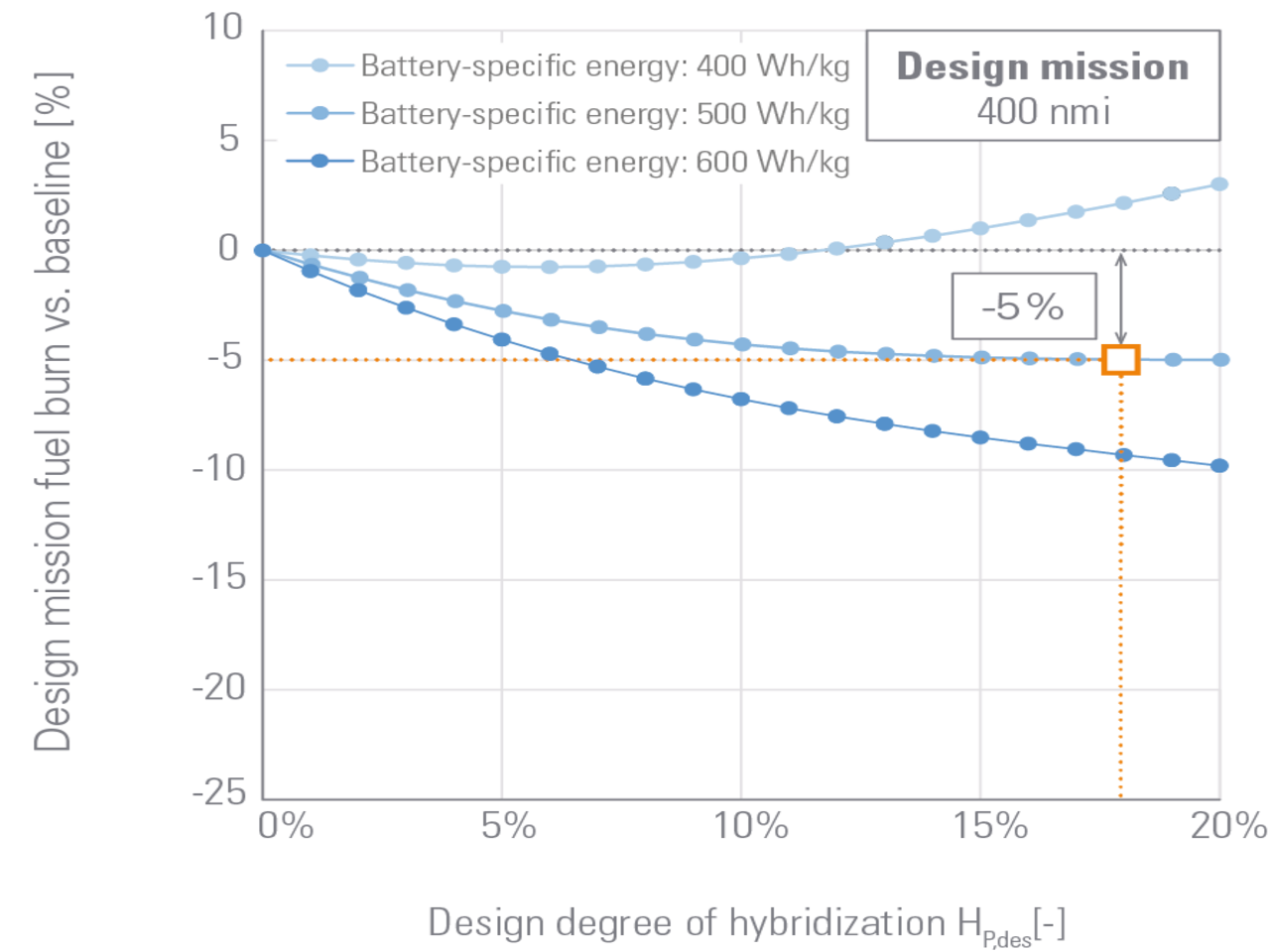
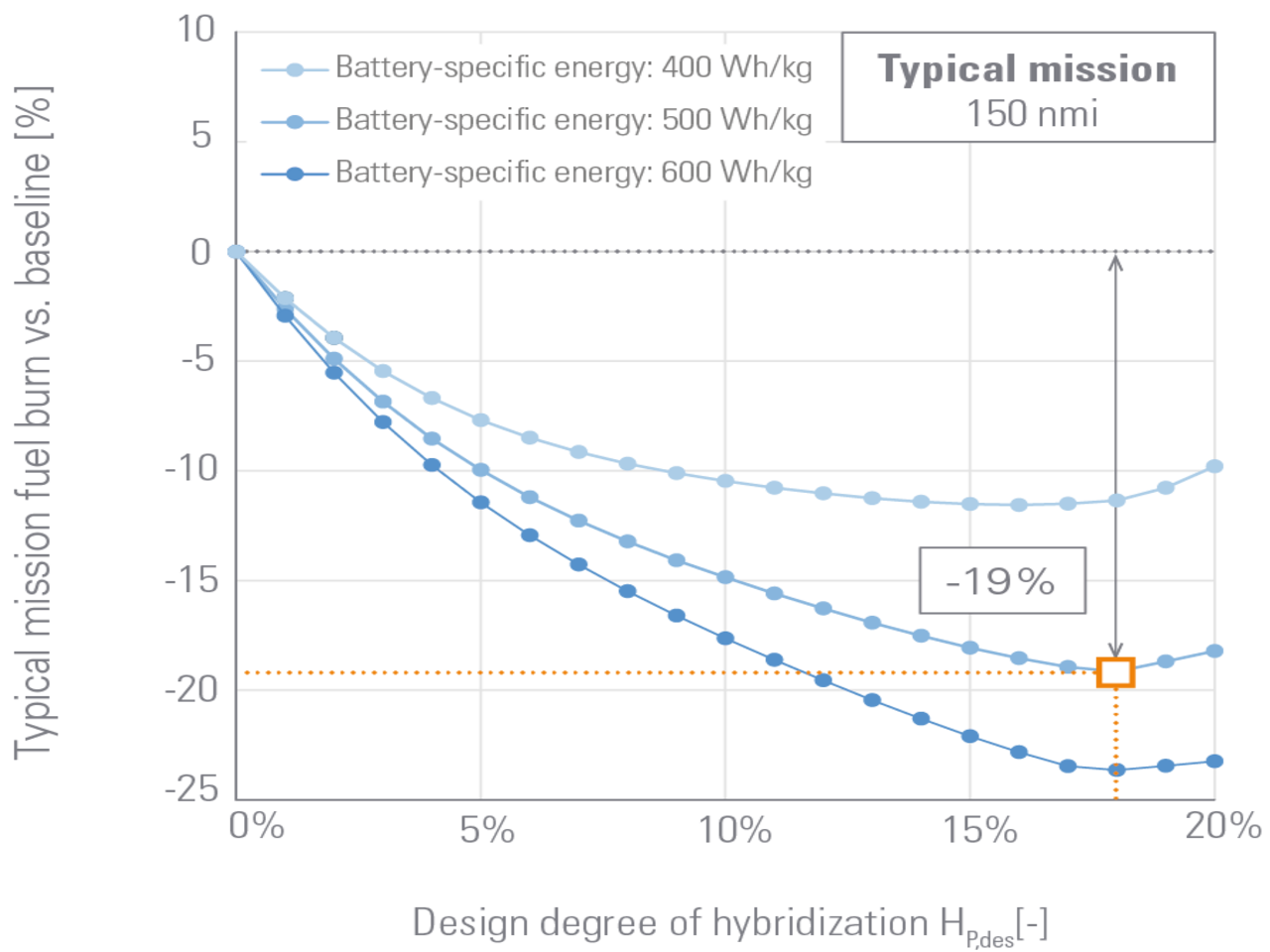
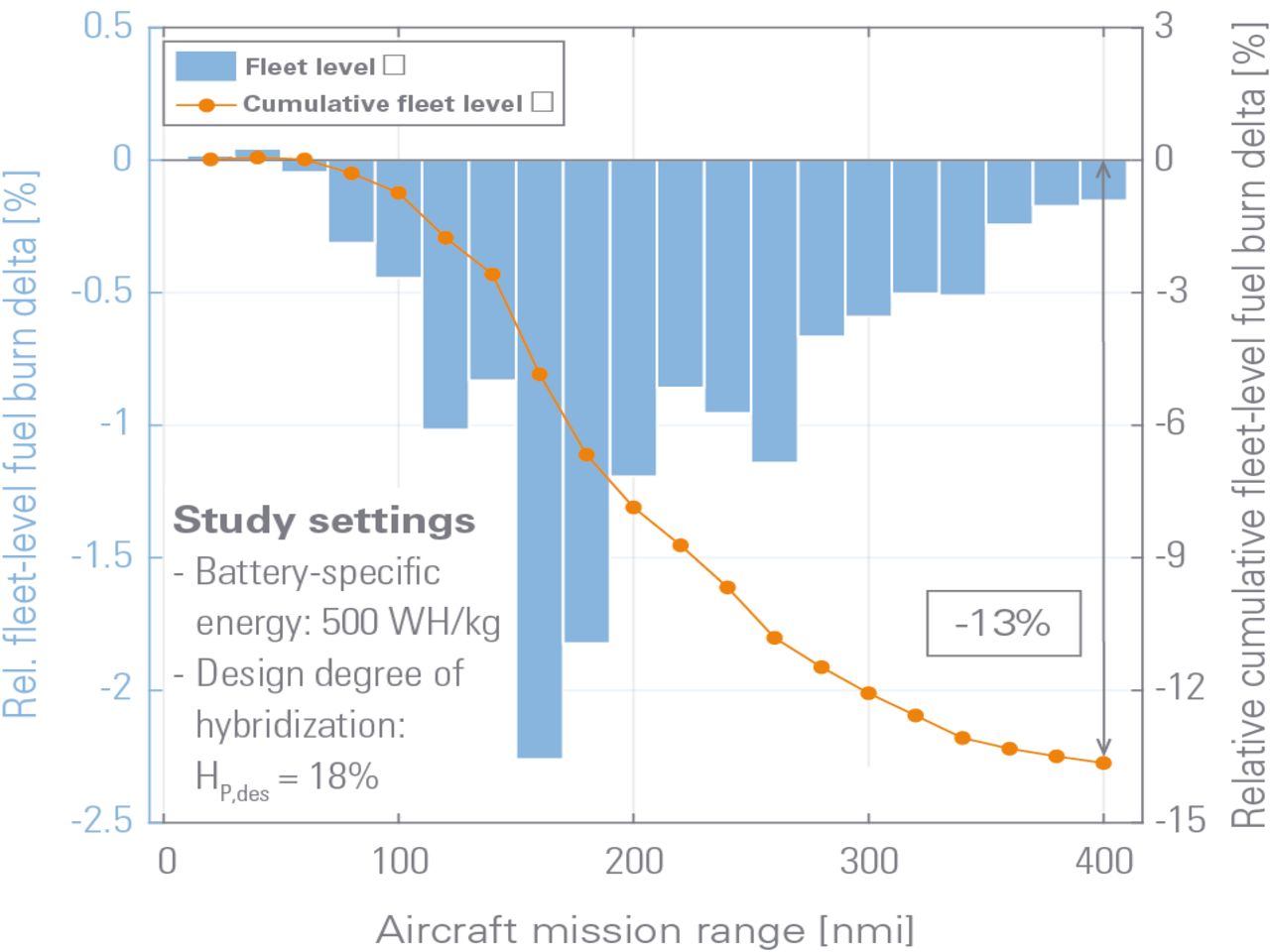
At aircraft level, fuel burn benefits strongly depend on mission range and feasible hybridization degree. For shorter missions, higher hybridization degrees and improved fuel burn can be achieved when fully utilizing the electrical storage capacity. For the regional aircraft, a fuel burn reduction of 5% is obtained for the 400 nmi design mission, whereas a 19% reduction is possible for a typical 150 nmi mission, assuming a battery-specific energy of 500 Wh/kg. Using a representative mission deployment, a fleet-level fuel burn reduction of 13% is expected.
Mission fuel burn improvement
Depending on the battery technology, the HybVer technology achieves a 5% fuel burn reduction for the design mission (left) and a 19% fuel burn reduction for the typical mission (right) compared to a regional baseline aircraft.
Fleet-level fuel burn assessment
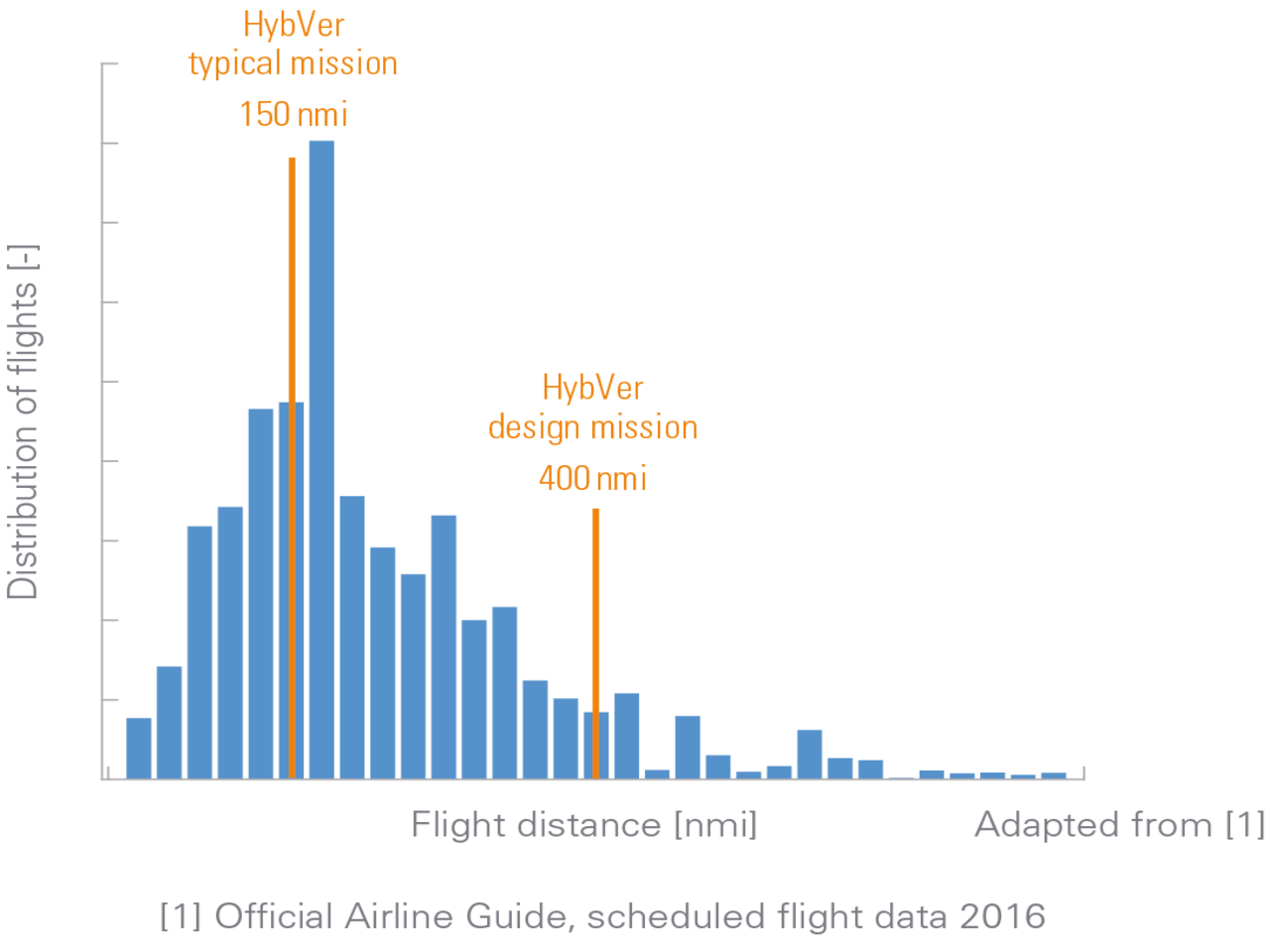
Applying a representative regional aircraft mission deployment (left), the fuel burn improvement of each range segment can be obtained (right), resulting in a cumulative fleet-level fuel burn reduction of 13%.

The underlying project was funded by the German Federal Ministry of Economic Affairs and Energy under the funding code 20E2111A.