
The EU-funded research and innovation project CIRCULAIR develops key technologies for advanced biofuel production from abundant agricultural residues using hydrothermal liquefaction (HTL). The CO2 streams that are released during this process are suitable for additional synthetic fuel production.

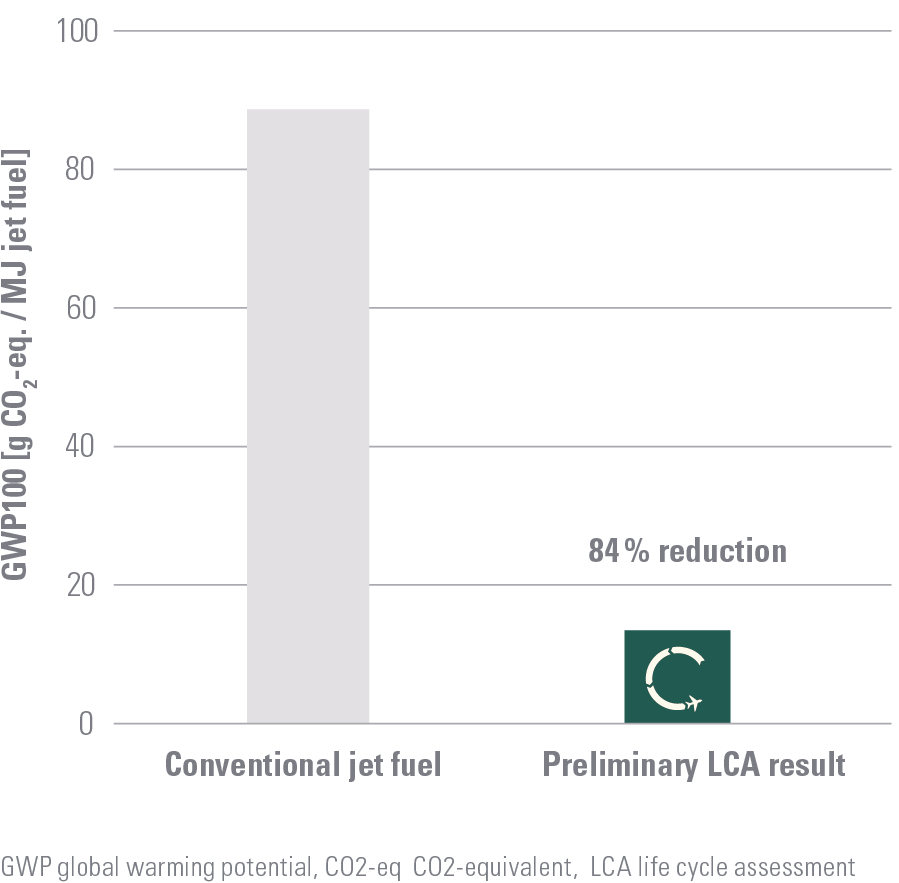
Bauhaus Luftfahrt has published initial production cost and greenhouse gas estimates for the concept investigated in CIRCULAIR. The results that are based on a preliminary system model are promising. The global warming potential is reduced by more than 80% compared to fossil kerosene. These low figures are achieved under the assumption that heat for the HTL process is generated from a by-product stream, and that about half of the hydrogen, which is needed for the upgrading of HTL biocrude, is sourced from renewable electricity.
The techno-economic analyses suggest that the mean production costs, averaged over all fuel products, will exceed current market prices for conventional kerosene. This was found even for a component-based bottom-up estimate of investment costs that takes future learning into account. On the other hand, the analyses suggest that HTL can be competitive with current bio-kerosene production, even if significantly higher investment costs are assumed, based on a lumpsum estimate from industry for the first industrial plants. The technological maturity of the HTL pathway is still significantly lower than that of established biofuel processes. Therefore, the cost estimates are only valid under the assumption that commercial HTL plants can be continuously operated under the assumed parameters.
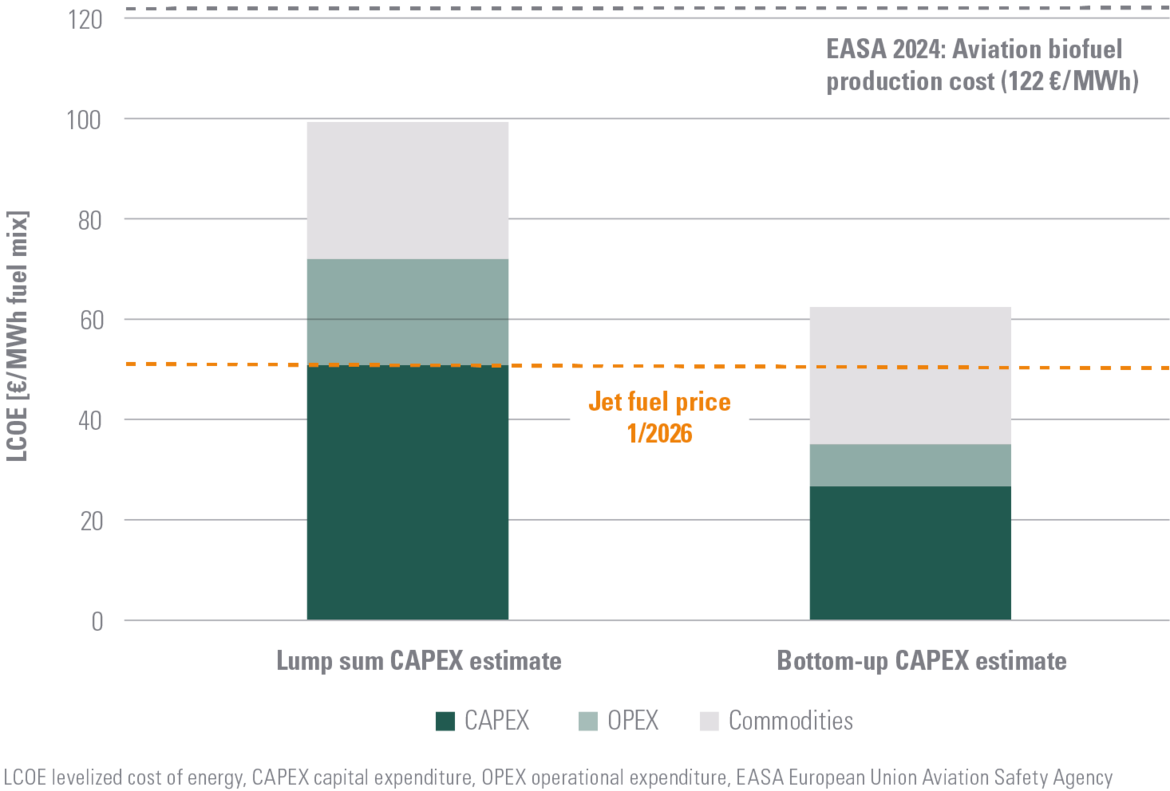

Added in proof yearbook 2025: Jet fuel prices reached record highs above $200 / bbl (> €110/ MWh) in March 2026. The TEA results indicate competitiveness of HTL fuel with fossil fuels if such price levels would persist over the plant life-time.